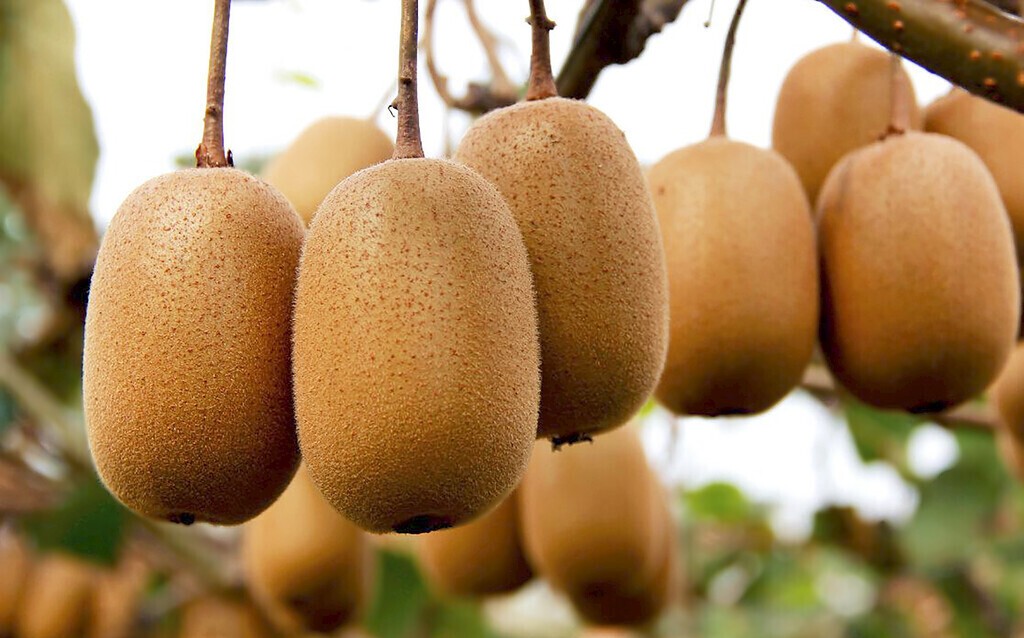
As China's output continues to rise, New Zealand's kiwifruit industry is facing pressure to revisit the outcome of a vote held years ago.
According to a report by New Zealand's Farmers Weekly, Zespri recently won a major plant variety rights lawsuit in China against local growers for the illegal cultivation of its G3 kiwifruit variety (brand name: SunGold). Meanwhile, the marketer's five-year research into how to handle fruits from illegal plantations has come to an end.
As early as in a 2021 vote by New Zealand growers, Zespri proposed a marketing pilot program in cooperation with growers in Sichuan, China, which would incorporate fruits produced by the latter into the Zespri brand for joint sales to supplement the supply of kiwifruit from New Zealand. However, the proposal was rejected. New Zealand growers raised concerns including the loss of intellectual property rights and potential risks to the quality of fruits produced in China.
Yet the scale of illegal planting has continued to expand ever since.
Reports indicate that the total area of illegal SunGold cultivation in China is now estimated at 7,500 hectares, with approximately 5,000 hectares in Sichuan Province— a figure that is closing in on the planting area of the G3 variety in New Zealand itself. Additionally, the estimated illegal output of 41 million cartons is not to be underestimated, and is already comparable to Zespri's total supply of G3 kiwifruit to the Chinese market.
This poses a distinct challenge to Zespri's market share during specific periods. With China's output on a steady rise, New Zealand's kiwifruit industry is facing mounting pressure to review the result of the 2021 vote.
Sichuan Province is one of China's major kiwifruit-producing regions. Of the province's total kiwifruit planting area of around 50,000 hectares, 30,000 hectares are devoted to red-fleshed varieties, while the remainder are yellow-fleshed varieties — including about 5,000 hectares of the G3 variety, with the vast majority being the local Jinyan variety.
Zespri's monitoring program includes tracking the development of orchards where the G3 variety was illegally introduced, and exploring feasible solutions to ensure fruit quality if cooperation with local growers is approved. The program initially selected 20 G3 growers with a total planting area of about 1,000 hectares as potential pilot suppliers for cooperation.
While Zespri is encouraged by its recent victory in the variety rights lawsuit, the current massive scale of local illegal cultivation means that the high cost of rights protection could trap the marketer in a costly game of whack-a-mole-style legal battles.
During a recent field visit by Farmers Weekly, local growers in Sichuan all acknowledged Zespri's lawsuit victory, but believed it would only delay, rather than halt, the continued expansion of G3 cultivation.